Searching for a pre-owned vehicle across Northern Ireland is an exciting venture that offers fantastic variety, whether you are browsing dealerships in Belfast, exploring independent forecourts in Derry, or visiting private sellers across rural towns. From economical commuter hatchbacks to spacious family estates built for rugged coastal drives, the second-hand market caters to every driving requirement and budget. However, stepping into the second-hand vehicle market without a thorough verification strategy can easily lead to costly mechanical headaches. While a freshly polished exterior, clean alloy wheels, and an immaculate interior might make a car look like an extraordinary deal on the surface, the structural integrity and mechanical health of a vehicle are never visible at first glance.
In years past, evaluating a second-hand vehicle often meant relying on a brief test drive around the block, a quick look over the engine bay, and the verbal assurances of the person selling the car. Today, modern digital resources provide buyers with unprecedented transparency. By utilizing comprehensive online testing registries and carrying out a detailed Vehicle check, anyone can examine a vehicle’s maintenance and inspection history in seconds before stepping onto a seller’s driveway. For motorists across Northern Ireland, knowing how to read and interpret these digital records, understand local testing differences, and conduct thorough pre-purchase investigations is essential. This comprehensive guide details everything you need to know about checking a vehicle’s background, navigating regional laws, and completing a secure, confident purchase from start to finish.
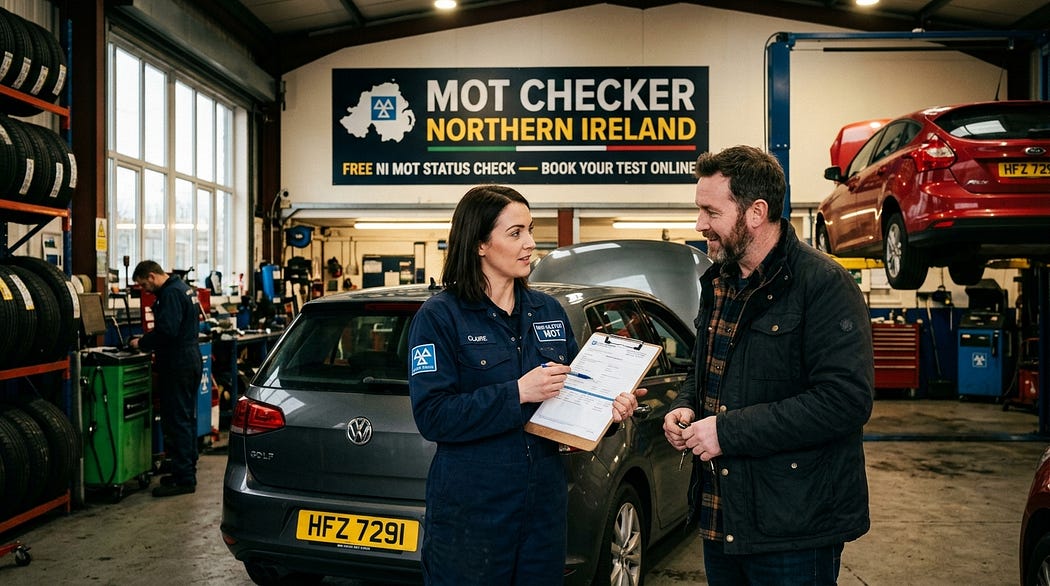
DVA Versus DVSA: How Northern Ireland’s Testing System Operates
When evaluating any vehicle currently residing in Northern Ireland, your first step should be understanding how local testing procedures operate compared to the system across England, Scotland, and Wales. Although the overarching objective remains identical—ensuring that every car on public roads meets strict physical, mechanical, and environmental safety standards—the administration, testing frequency, and facility structure differ significantly across the Irish Sea.
Government-Operated DVA Centres Versus Mainland Private Garages
Throughout Great Britain, annual roadworthiness inspections are carried out by thousands of privately owned commercial garages, dealerships, and independent repair workshops that have been officially accredited by the Driver and Vehicle Standards Agency (DVSA). These commercial garages conduct annual safety examinations alongside their daily repair, servicing, and parts sales businesses. In sharp contrast, the framework in Northern Ireland is administered directly by the public sector. The Driver and Vehicle Agency (DVA) operates specialized, government-run testing facilities located across the province, with regional centres serving areas such as Belfast, Coleraine, Ballymena, Enniskillen, and Newry.
This unique government-run structure provides a major structural advantage for anyone shopping for a used car. Because DVA test centres focus strictly on vehicle inspection rather than mechanical repairs, there is no commercial conflict of interest. When an inspector checks a car inside a DVA facility, their sole objective is to evaluate whether the vehicle meets mandatory legal safety standards at that exact moment. They do not sell replacement brake discs, fit new tyres, or carry out exhaust welding repairs. As a result, the pass, fail, and advisory records generated by DVA examiners represent an objective, independent engineering assessment of the vehicle’s condition.
When reviewing the historical records of a car advertised in Northern Ireland, you should also pay attention to where its previous inspections were conducted. The local second-hand market frequently includes vehicles that originally started their lives in mainland England or Scotland before being brought across the Irish Sea by local dealerships or buyers seeking wider selection. If you are examining an imported vehicle, its online records will show annual checks carried out at private mainland garages accredited by the DVSA right up until the date it arrived in Northern Ireland and entered the DVA testing network. Understanding this transition helps you trace the vehicle’s geographic and maintenance history accurately.
Navigating the Four-Year Exemption Rule and Imported Vehicle Histories
Another important regional difference that frequently catches out both first-time buyers and experienced UK drivers moving to Northern Ireland is the age at which a brand-new vehicle must undergo its first safety check. Across England, Scotland, and Wales, every passenger vehicle must be submitted for its initial inspection exactly three years after its original date of registration under DVSA regulations. In Northern Ireland, however, local motoring law grants vehicles a four-year initial grace period before their first formal safety check becomes due.
Once a vehicle registered in Northern Ireland reaches four years of age, it must then undergo an annual safety check every twelve months thereafter, aligning with the standard annual testing schedule across the rest of the UK. This four-year rule has important practical implications when you are evaluating cars that are between three and four years of age. For example, if you are looking at a three-and-a-half-year-old vehicle that was originally purchased from a dealership in Belfast and has remained registered locally since new, it will not yet possess an online testing record. In this situation, a completely blank test history is normal and fully compliant with local regulations.
Conversely, if you are considering purchasing a three-year-old vehicle that was originally registered in London or Manchester before being brought over to Northern Ireland by a car supermarket, that car should have completed its initial three-year check under Great Britain laws prior to or shortly after its arrival. Always check the date of first registration shown on the V5C logbook against the entries on the public portal to ensure the car’s testing records align with its actual age and origin.
Managing Expiry Dates, Exemption Certificates, and Booking Queues
In recent years, the DVA testing network across Northern Ireland has experienced extended waiting times for appointment slots at popular regional centres. During high-demand periods or infrastructure updates, booking windows can stretch weeks or even months ahead of a vehicle’s current expiry date. To ensure that responsible motorists are not unfairly taken off the road while waiting for an available inspection bay, the authorities have periodically issued Temporary Exemption Certificates (TECs) for qualifying vehicles.
When checking a vehicle’s official MOT status online, you must look carefully at the exact summary details presented on the screen. If a car has been granted a temporary exemption due to regional booking backlogs, the online portal will display an extended expiry deadline reflecting that administrative extension. It is important to confirm whether the car holds a standard twelve-month pass certificate issued after a thorough physical inspection, or if its current road-legal status relies on a temporary administrative extension.
If you are inspecting a vehicle whose current certificate is within weeks of expiring, or one operating under a temporary extension, ask the seller directly whether they have already secured a confirmed test appointment at a local DVA facility. A responsible owner who is selling a car right before its annual check is due will typically either have a booking confirmation ready to transfer to the new owner, or be willing to submit the vehicle for its check before handing over the keys. If the expiry date has already passed without an exemption or valid booking, the car cannot legally be driven on public roads under any circumstances, except when traveling directly to a pre-booked testing appointment or to an authorized repair workshop.
Step-by-Step Digital Forensics: Decoding an Online MOT History
Mastering the art of checking a vehicle’s digital history involves much more than glancing at whether the overall outcome reads “Pass” or “Fail.” The public database stores an objective, multi-year diagnostic log of every mechanical issue, component wear pattern, and mileage reading recorded throughout a vehicle’s life. Knowing how to extract and interpret this information gives you immense confidence and protects your budget from unpleasant surprises.
What You Need to Perform an Instant Online Verification
To initiate your digital background check, you do not need any confidential paperwork, nor do you require prior authorization from the current owner. The only piece of information required is the vehicle’s registration number (the number plate). You do not even need the eleven-digit reference number from the V5C logbook to review past inspection results, advisory notes, and recorded odometer readings.
By entering the vehicle’s registration plate into the official online check portal, you gain instant access to its complete public file. The summary screen immediately presents the factory specification, including the manufacturer, model variant, exact fuel type, engine capacity, and registered colour. Take a moment to verify that the physical car sitting in front of you matches every single detail displayed on your screen. While confirming the colour and model variant seems basic, criminals occasionally attach cloned number plates from a clean, legitimate car onto a stolen or severely damaged vehicle of similar appearance to hide its identity. Confirming that the physical details match the digital record is your first step in ruling out cloning fraud.
Interpreting Advisories, Major Defects, and Dangerous Failures
Once you open the detailed testing history, you will encounter a chronological log of every formal check the vehicle has undergone. Each entry shows the exact date of the inspection, the mileage recorded on the dashboard that morning, and the overarching result: either a pass or a failure. Beneath each result, you will find specific technical observations organized into distinct severity tiers. Understanding what these categories mean is crucial for distinguishing between routine consumable wear and chronic mechanical neglect.
Under the modern inspection system, identified issues are divided into three clear severity levels:
- Dangerous Defects: These represent severe faults that pose an immediate, critical threat to road safety or environmental protection. Examples include heavily fractured brake discs, leaking hydraulic brake lines, structural chassis cracks near suspension mounts, or tyres worn down so deeply that the internal steel cords are exposed. If a vehicle receives a dangerous defect rating, it fails instantly and is legally forbidden from being driven away from the testing centre until the dangerous condition is professionally repaired.
- Major Defects: These are significant technical faults that compromise vehicle safety, put other road users at risk, or cause the vehicle to exceed permissible exhaust emission limits. Examples include a non-functioning headlamp, excessive rotational play in steering track rod ends, or heavily worn brake pads close to the metal backing plates. A major defect results in an immediate failure, and all highlighted items must be repaired before a pass certificate can be issued.
- Minor Defects and Advisories: This is where the true engineering story of a used car is revealed to the careful buyer. Minor defects and advisories do not cause a vehicle to fail its annual check; instead, they serve as formal, documented warnings from the examiner that a specific component is beginning to show early signs of wear, surface corrosion, or impending fatigue. Common advisory items on Northern Ireland roads include early-stage surface corrosion along underbody subframes (often caused by winter road salting), brake discs showing minor surface scoring, suspension bushes beginning to show rubber wear, or a tyre nearing the legal tread limit while remaining legal on the day of the test.
When examining a vehicle’s digital history, do not allow a past failure entry from two or three years ago to automatically disqualify the car from your consideration. Even well-maintained vehicles can occasionally fail an inspection due to a blown registration plate bulb, a perished windscreen wiper blade, or an unexpected puncture in a rear tyre. What matters most is the speed and thoroughness with which the owner resolved the issue after the failure occurred.
Look closely at the timeline between a failed test entry and the subsequent re-test pass. If the record shows that a car failed due to worn front brake pads and a leaking front shock absorber, and then passed cleanly just two or three days later with no remaining defects, that demonstrates that the owner immediately booked the car into a reputable workshop and invested the necessary funds to replace the worn parts properly.
Conversely, you must exercise extreme caution when you see identical advisory notices repeating consecutively across two, three, or four annual checks. If an examiner notes “slight play in front suspension ball joint” and “rear brake discs pitted” in 2021, and those exact same advisories appear again in 2022 and 2023 without ever being resolved or resulting in a clean pass, you are looking at clear proof of deferred maintenance. An owner who continually ignores documented mechanical warnings until components reach absolute failure point is almost certainly cutting corners on regular servicing, oil changes, and preventive mechanical care. Before scheduling a forecourt viewing or putting forward a formal offer, running the registration plate through a dependable verification portal and consulting a FreeMOTChecker allows you to review historical failure notices, advisory notes, and odometer trends so you can accurately budget for upcoming Vehicle maintenance and negotiate a fair price.
Identifying Mileage Tampering and Odometer Clocking Patterns
In addition to serving as a structural safety record, the digital testing database acts as a powerful fraud prevention tool. Every single time a vehicle is presented at a testing facility, the examining officer takes a precise reading directly from the dashboard odometer and records that exact figure into the permanent digital registry. Over the course of five, ten, or fifteen years, these sequential annual entries form an unbroken mathematical timeline of exactly how far the car has traveled.
When reviewing the digital history of any prospective used car, start at the very first recorded test and trace the mileage figures year by year straight through to the most recent entry. In an honest, genuine vehicle, you will see a logical, steadily increasing upward curve. For example, a standard family commuter car might cover between 8,000 and 12,000 miles every twelve months, resulting in a steady, predictable progression across its historical ledger.
You must immediately pause and investigate further if your digital audit uncovers any of the following mileage anomalies:
- Sudden Odometer Rollbacks: If the official ledger records that a car had covered 94,000 miles during its 2022 check, but the 2023 inspection records an odometer reading of just 61,000 miles, you have uncovered a glaring warning sign. Unless the owner can provide fully documented, verifiable workshop invoices proving that the entire instrument cluster was officially replaced by a franchised dealership due to an electrical failure, a drop in recorded mileage almost certainly confirms that the odometer has been illegally altered (commonly known as “clocking”) to artificially inflate the car’s resale value.
- Suspicious Mileage Stagnation: Pay close attention to vehicles that accumulated heavy mileage—such as 25,000 to 30,000 miles annually during their first three years as commercial company cars or motorway lease vehicles—only to suddenly drop to recording just 400 or 500 miles a year for the next four years right before being listed for sale. While lifestyles do change, and some vehicles become secondary family runabouts, dramatic drops in usage warrant polite questioning and careful cross-referencing against physical service logbook stamps.
- Typographical and Clerical Errors: Occasionally, an apparent discrepancy is simply the result of human error at the testing station. An busy examiner might accidentally strike an extra zero on their keypad, recording 120,000 miles instead of 12,000, or transpose two numbers. If you suspect an honest clerical mistake, ask the seller to show you the physical paper servicing receipts or workshop invoices from that exact same year to confirm what the actual dashboard mileage reading was during routine servicing.

Using Online Diagnostic Records to Negotiate a Better Price
One of the most practical financial advantages of conducting a thorough online history check ahead of a viewing is that it equips you with objective, indisputable engineering data that can be used during price negotiations. When private sellers or commercial dealerships price a used vehicle, their asking figure is almost always based on the assumption that the car is in excellent, turn-key condition without any immediate mechanical expenditure required from the incoming buyer.
If your preliminary online analysis reveals that the vehicle passed its most recent safety check just two months ago, but the official certificate carries several significant advisory notices—for instance, two front tyres nearing the minimum legal tread limit, front brake discs displaying wear, and early signs of exhaust pipe corrosion—you know with complete certainty that you will need to spend several hundred pounds on standard consumable replacements within a matter of months.
During your physical viewing on the forecourt or driveway, discuss these documented advisory items in a calm, polite, and constructive manner. Rather than aggressively criticizing the car or arguing with the seller, explain clearly that while you genuinely admire the vehicle and are keen to proceed, you have realistically budgeted for the cost of replacing those worn tyres and servicing the brakes exactly as highlighted by the examiner on the official test record. Using government-recorded advisories as structured negotiation leverage allows you to make a logical, well-justified counter-offer that reflects the true, real-world financial cost of bringing the vehicle into pristine mechanical condition.
Essential Pre-Purchase Checks Beyond the Safety Certificate
While confirming that a car possesses a clean, well-documented testing history and holds a valid pass certificate is essential, it is critical to understand what a safety inspection does not cover. An annual inspection is strictly an evaluation of physical roadworthiness at a specific point in time; it does not guarantee internal engine health over the next twenty thousand miles, nor does it verify that the vehicle is legally safe from a financial, ownership, or legal perspective. To ensure complete peace of mind when buying a second-hand car, you must complement your mechanical checks with several vital historical and administrative investigations.
Navigating Vehicle Excise Duty (Road Tax) and SORN Regulations
A common misconception among everyday motorists across the UK is the belief that when you purchase a second-hand vehicle, any remaining Vehicle Excise Duty (Road tax) automatically transfers over to the new owner along with the keys and logbook. Under current UK vehicle taxation rules, this is categorically not the case. Whenever a vehicle changes ownership—whether sold privately on a residential street or bought from a commercial dealership—the existing tax policy is instantly cancelled by the Driver and Vehicle Licensing Agency (DVLA), and the previous registered keeper automatically receives a pro-rata refund for any remaining full months of pre-paid tax.
This means that the very instant you complete the purchase and take legal ownership of the vehicle, the car is legally untaxed, regardless of whether the previous owner’s online status showed six months of tax remaining earlier that same day. Driving an untaxed car on public highways—even for the twenty-minute drive home from the seller’s house—is a strict liability offense that can result in substantial monetary fines, vehicle clamping, or immediate roadside seizure by law enforcement Automatic Number Plate Recognition (ANPR) cameras.
Before you travel out to collect your new vehicle, use the official government online check portal to verify its exact current taxation status. You can instantly see whether the vehicle is currently taxed by the seller or if it has been formally declared off the road via a Statutory Off Road Notification (SORN). More importantly, prepare yourself to tax the vehicle in your own name before you start the engine to drive home. As soon as the seller completes the transfer and hands you the green new keeper supplement slip (V5C/2) from the logbook, you can use the twelve-digit reference number printed on that slip to go online via your smartphone and purchase your new Road tax in less than five minutes.
Conducting Private History Checks for Outstanding Finance and Write-Offs
Perhaps the most dangerous financial pitfall in the used car market involves hidden legal and financial encumbrances that public government testing databases do not display. A car can boast a spotless testing history, low mileage, and immaculate paintwork, yet still hide severe legal liabilities that could result in the vehicle being repossessed directly from your driveway without a single penny of compensation.
To protect your hard-earned savings, you must always commission a comprehensive private background data check—commonly known as an HPI check or vehicle history report—before paying any deposit or handing over the purchase funds. A thorough history report queries private banking registries, insurance databases, and national police records to answer three non-negotiable questions:
- Is there outstanding finance secured against the vehicle? A significant percentage of modern vehicles across the UK are purchased through Hire Purchase (HP) or Personal Contract Purchase (PCP) finance agreements. Until the final balloon payment is settled with the lending bank, the vehicle remains the absolute legal property of the finance company, not the driver keeping it on their driveway. If a dishonest seller sells you a car that has outstanding finance attached to it and subsequently stops making their monthly payments, the lending institution retains the legal right to track down the vehicle and repossess it from you, leaving you entirely out of pocket with no legal claim to the car.
- Has the vehicle ever been written off by an insurance company following an accident? If a vehicle has been involved in a severe collision, flood, or fire, an insurance assessor may have declared it a total structural or economic loss. While some vehicles that have been repaired to high professional standards (Category S for structural damage or Category N for non-structural damage) can return legally to the road after passing thorough engineering inspections, their true market valuation is permanently reduced by 20% to 30% compared to un-damaged examples. Furthermore, you must know if a vehicle has ever been classified as Category A or Category B, which are mandatory scrap categories that must never be permitted back onto public highways under any circumstances.
- Is the vehicle currently recorded as stolen on national police databases? A comprehensive data report cross-references the registration number plate and the unique Vehicle Identification Number (VIN) directly against law enforcement records to ensure that the car has not been reported stolen, misappropriated, or subjected to identity cloning.
Investing twenty or thirty pounds into a verified, highly detailed private history check is a negligible cost when compared to the risk of losing thousands of pounds on a legally compromised vehicle.
Performing a Hands-On Driveway Inspection to Match Online Data
Once your digital history research, mechanical audit, and financial background checks have all returned clean results, the final stage is to physically verify that the metal, rubber, and glass sitting before you align perfectly with the digital documentation. Never rely solely on what a screen tells you; use your own senses to inspect the physical condition of the vehicle.
Begin your hands-on examination by inspecting the Vehicle Identification Number (VIN). The VIN is a unique seventeen-character alphanumeric code that serves as the vehicle’s permanent identity stamp. You will typically find the VIN stamped directly into the metal chassis in the engine bay under the bonnet, displayed on a metal plate visible through the bottom corner of the passenger-side windscreen, and printed on the factory sticker attached to the driver’s door pillar. Carefully check that the physical VIN stamped on the car matches character-for-character with both the V5C logbook document and the data shown on your online check reports. Any sign of grinding, scratch marks, or re-stamping around the chassis plate is an immediate instruction to walk away.
Next, inspect the condition of consumable mechanical items that frequently feature in testing advisories:
- Tyres: Walk around the entire vehicle and carefully examine all four corners, along with the spare wheel or inflation kit inside the boot. Check that the tread depth across the central three-quarters of the tyre is comfortably above the legal minimum threshold of 1.6 millimetres—ideally, a healthy, safe tyre should offer at least 3 millimetres of remaining tread. Look closely at the outer and inner sidewalls for signs of perishing rubber, hairline cracking, or impact bulges caused by potholes. Furthermore, check the four-digit DOT manufacturing date stamp on the tyre sidewall (for example, a stamp reading “2421” indicates that the tyre was manufactured in the 24th week of 2021). If any tyre is more than seven or eight years old, the rubber compound will have hardened significantly, drastically reducing braking grip even if plenty of tread depth remains.
- Underbody and Suspension: While you may not have access to a hydraulic workshop hoist during a driveway viewing, bring a bright flashlight and kneel down to look underneath the front and rear sills. Inspect the underbody subframes for flaking rust, check suspension arms for excessive corrosion, and look for damp oil patches around shock absorbers, steering racks, and differential joints that might correlate with past advisory warnings from the examiner.
- Under the Bonnet: Pop the bonnet and inspect all primary fluid reservoirs, including engine oil, engine coolant, brake fluid, and power steering fluid. Pull the engine oil dipstick and wipe it on a clean white tissue; fresh or healthy engine oil should appear relatively clean or dark brown, whereas thick, creamy, mayonnaise-like residue under the oil filler cap can indicate internal condensation or a failing cylinder head gasket. Ensure the coolant level sits comfortably between the minimum and maximum markers and displays a clear, bright colour without any oily sludge floating on the surface.

Finalizing a Safe, Legal, and Secure Vehicle Purchase
If your comprehensive digital vetting, your financial background audit, and your thorough physical driveway inspection have all confirmed that the car is genuine, mechanically sound, and fairly priced, you are finally ready to complete the purchase. However, the final administrative paperwork must be handled with equal attention to detail to ensure your new ownership is legally secure and fully compliant with national motoring laws.
Securing Active Motor Insurance Prior to Collection
Never make the mistake of assuming that the seller’s existing motor insurance policy will cover you to drive the car home, even if the seller gives you explicit verbal permission to drive away. Under UK insurance law, motor policies are strictly tied to the individual driver and their specific legal relationship with the vehicle. Even if your personal annual car insurance policy includes a “Driving Other Cars” (DOC) extension, that benefit almost universally only applies to third-party vehicles that do not belong to you and are currently actively insured by another registered owner. The exact second you hand over the purchase money and take ownership of the vehicle, your DOC extension ceases to apply to that car.
Before you get behind the steering wheel to begin your journey home, you must establish valid motor insurance cover in your own legal name. You can either contact your existing insurance provider to formally transfer your annual policy over to your new registration number starting immediately from the hour of collection, or you can purchase a dedicated short-term, temporary drive-away policy covering anywhere from one hour to thirty days while you finalize your permanent annual coverage. Having valid motor insurance active and registered on the Motor Insurance Database (MID) is also a mandatory legal requirement before the online system will allow you to purchase Road tax.
Finalizing V5C Logbook Transfer and Preventing Document Fraud
The final paper transaction revolves around the official V5C vehicle registration certificate (the logbook). When examining the paper V5C presented by the seller, hold the multi-page document up to the natural light to verify that it displays the genuine DVA/DVLA embedded watermark and is not a sophisticated photocopy or counterfeit document. Check that the logbook carries a valid, active multi-digit document reference number and that the registered keeper’s name and address printed on the front page match precisely with the location where you are viewing the car and the identity of the person standing beside you. Be extremely cautious if a seller asks to meet you in a neutral public location like a retail car park or petrol station and presents a V5C logbook registered to an unfamiliar address miles away.
When transferring ownership, by far the fastest, most secure, and most reliable method is to complete the process online using the official government transfer portal alongside the seller. By logging onto the official website using the document reference number printed on the V5C, the seller can officially notify the authorities that legal responsibility for the vehicle has transferred to you right there on a smartphone or tablet. The digital system updates the national vehicle registry immediately, canceling the previous owner’s tax policy and generating an instant email confirmation for both buyer and seller.
If you complete the transfer online, the seller must detach and hand you the green V5C/2 “new keeper” supplement strip and carefully destroy or retain the remainder of the old paper logbook to prevent accidental duplicate processing or identity misuse. Your brand-new, updated V5C logbook will then be printed and dispatched directly to your home address via official mail within three to five working days. If for any reason the online digital service cannot be accessed on the day, ensure that both you and the seller complete, sign, and date Section 6 (or the relevant new keeper transfer section) of the paper document clearly, take a sharp digital photograph of the completed pages for your personal records, and post it immediately to the authorities via recorded delivery.
Conclusion
Navigating the second-hand vehicle market in Northern Ireland does not need to be an intimidating or hazardous ordeal. While the marketplace inevitably contains its share of neglected mechanical liabilities and overpriced examples, the comprehensive digital tools available to modern car buyers provide an unprecedented level of transparency and consumer protection. By utilizing public online testing databases, you can strip away the uncertainty and examine a vehicle’s true mechanical past with complete clarity.
Always remember the golden formula of smart, confident car buying: begin your investigation from the comfort of your home by scrutinizing the online safety records, analyzing past failure notices, tracking annual mileage progressions to catch tampering, and verifying regional DVA compliance. Once a vehicle passes your strict digital audit, reinforce that research with a thorough private financial background check to rule out outstanding PCP finance or hidden insurance write-off categories. Finally, arrive at your viewing armed with the knowledge and confidence needed to conduct a thorough physical inspection of the tyres, brakes, and underbody, using documented historical advisory data to negotiate a fair, realistic price.
By remaining patient, methodical, and uncompromising in your pre-purchase checks, you safeguard your hard-earned savings against unexpected repair bills and ensure that the car you bring home is safe, legal, and ready to deliver years of dependable motoring across Northern Ireland and beyond. Take your time, verify the facts, and enjoy the journey with total confidence.