A severe storm can pass through Monroe in a matter of minutes and leave you with an unpleasant surprise: dozens of small dents scattered across your vehicle. You may walk outside expecting nothing more than wet pavement, only to discover marks covering the hood, roof, trunk, and other exposed panels.
Hail damage can be frustrating because the vehicle may still start, drive, and handle normally. At the same time, those dents can make a well-maintained car look neglected and may become harder to ignore every time sunlight catches the damaged panels.
The good news is that hail damage does not automatically mean replacing body panels or committing to extensive traditional bodywork. The first step is understanding what happened, documenting the condition, and having the vehicle assessed by someone who knows how to distinguish repairable cosmetic damage from more serious problems.
Start With a Careful Inspection After the Storm
Once the storm has passed and it is safe to go outside, resist the temptation to immediately wash or polish the vehicle. First, take a few minutes to document what you can see.
Walk Around the Entire Vehicle
Hail rarely hits just one convenient spot. Check the roof, hood, trunk, doors, fenders, pillars, and other horizontal or exposed surfaces.
Look at the vehicle from several angles because shallow dents may be difficult to see when the light is coming from the wrong direction.
Check the Paint
Pay attention to scratches, chips, cracks, or areas where the finish appears broken. Intact paint is an important factor when determining whether paintless dent repair may be suitable.
Do not assume that every visible dent needs repainting simply because the panel looks damaged.
Look at the Glass and Lights
Hail can also damage windshields, windows, mirrors, headlights, and taillights. Cracked glass or broken lighting components should be addressed separately from cosmetic dents.
If you notice anything that affects visibility or safe operation, prioritize that issue before cosmetic repairs.
For Monroe vehicle owners dealing with storm-related dents, Hail Damage Repair can help restore damaged panels and improve the vehicle’s appearance when the damage is suitable for professional repair.
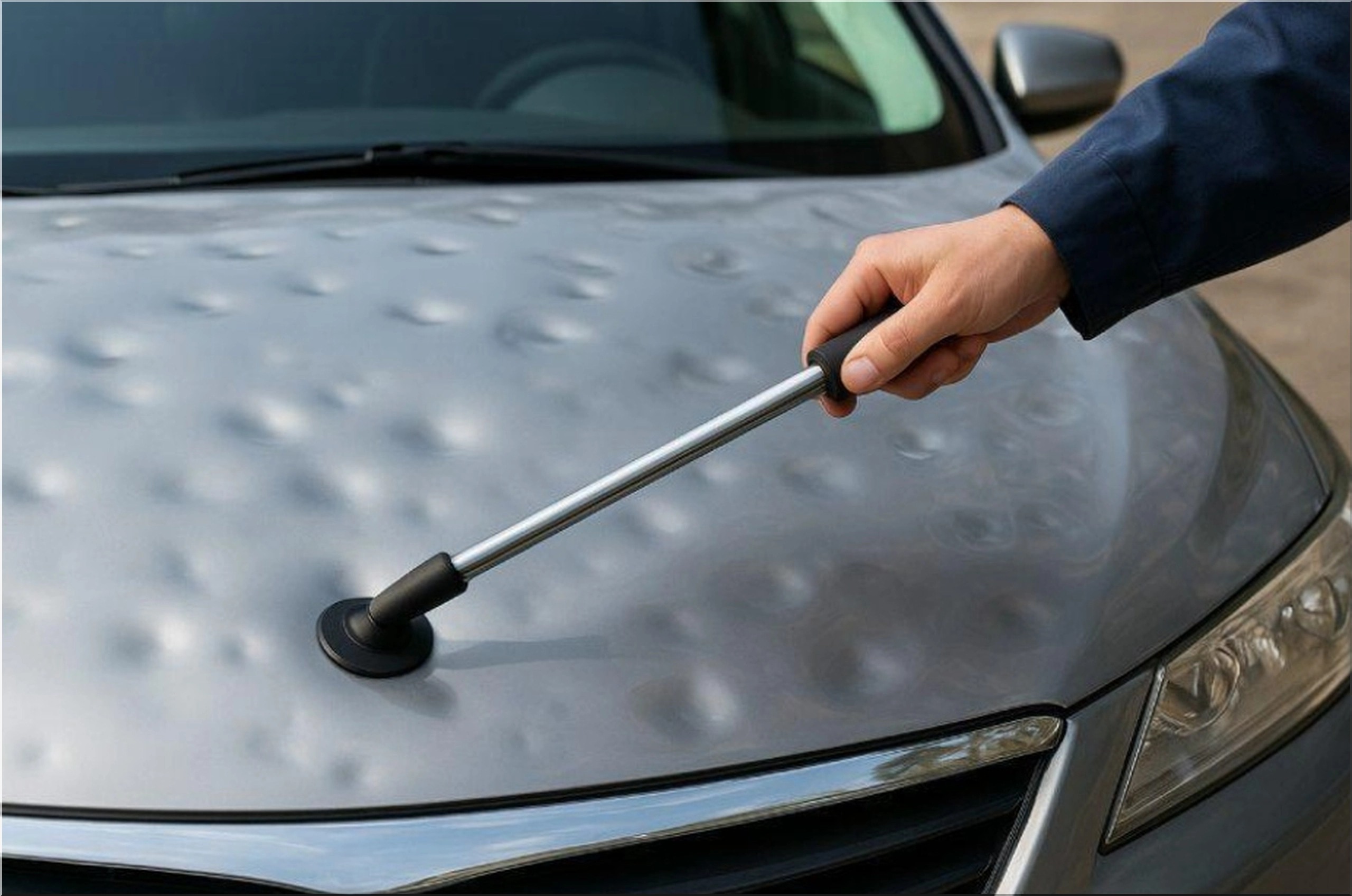
Why Hail Damage Can Be So Noticeable
A few hail dents may seem insignificant when viewed individually. The overall effect can be much more dramatic when several panels are affected.
Dents Distort Reflections
A smooth hood normally reflects light evenly. Each dent changes that reflection, creating small waves or dark spots that become obvious under bright outdoor lighting.
This is why hail damage can look much worse after the vehicle is parked in direct Louisiana sunshine.
Multiple Dents Change the Vehicle’s Appearance
A single parking-lot ding might be easy to overlook. Twenty or thirty shallow hail dents across a roof and hood are considerably harder to ignore.
Professional repair can address the overall pattern rather than focusing only on the most noticeable dent.
Real Challenges Monroe Drivers Face After Hail
Hail damage creates more than an appearance problem. Local vehicle owners often have practical concerns that need answers.
Not Knowing How Serious the Damage Is
It is difficult to judge hail damage accurately from a quick glance. Some dents are shallow and straightforward, while others may involve stretched metal or damaged paint.
A professional inspection can give you a clearer picture before you decide what to do next.
Worrying About Repair Costs
Seeing numerous dents can immediately make you assume the repair will be extremely expensive. The actual cost depends on factors such as the number of dents, their depth, panel locations, and the repair method.
Getting an assessment and clear estimate gives you useful information before authorizing work.
Managing the Vehicle After a Storm
You may need your vehicle for commuting around Monroe, taking children to school, shopping, or getting to work. Leaving it at a repair facility for longer than necessary may not fit your schedule.
When appropriate, PDR can provide a targeted approach to certain types of hail damage.
Why Paintless Dent Repair Is Often Considered for Hail
Paintless dent repair, or PDR, is a technique designed to reshape suitable damaged metal without automatically sanding, filling, and repainting the affected panel.
A technician uses specialized tools and controlled pressure to work from appropriate access points behind the panel.
It Can Preserve the Factory Finish
When hail has dented the metal but left the paint intact, preserving the original finish can be a major advantage. There is no need to introduce a new layer of paint simply to address a dent that can otherwise be reshaped.
It Targets the Actual Damage
Instead of covering the dent with filler, PDR focuses on gradually returning the metal to its intended contour.
This can be especially useful when a vehicle has numerous small, shallow dents caused by the same storm.
It Can Avoid Unnecessary Panel Replacement
A damaged-looking panel is not automatically a panel that needs to be replaced. If the existing metal can be restored safely, repairing it may make more sense than replacing a perfectly usable component.
A professional evaluation determines whether that option is realistic.
Monroe Weather Makes Prompt Evaluation Sensible
Monroe residents know that Louisiana weather can change quickly. Heavy rain, thunderstorms, strong winds, and hail can all create problems for vehicles parked outdoors.
Cars sitting in driveways, workplace lots, shopping-center parking areas, or near busy parts of town may have little protection when a storm arrives.
After a significant storm, check your vehicle when conditions are safe. Drivers around downtown Monroe, Pecanland Mall, and neighborhoods near the Ouachita River may notice damage differently depending on where the vehicle was parked and how the storm moved through the area.
You do not necessarily need to rush into repairs the moment you see a dent, but getting the damage documented and assessed can prevent uncertainty from dragging on.
What to Do Before Scheduling Repairs
A little preparation can make the process much easier.
1. Photograph Everything
Take clear photographs of each affected panel. Include both close-up images and wider shots that show the location of the dents.
2. Do Not Try to Push the Dents Out
Hail dents can be surprisingly delicate. Pressing on them with your hands or using household tools may create additional distortion.
3. Avoid DIY Suction Tools
A suction cup may seem harmless, but applying force without understanding the panel’s structure can make the damage harder to correct.
4. Ask for a Professional Assessment
Have the vehicle evaluated under appropriate lighting. The technician can determine the condition of the paint and metal and identify areas that may require different treatment.
5. Discuss the Repair Method
Ask whether PDR is appropriate and why. You should understand the reasoning behind the recommended repair rather than simply accepting a generic estimate.
6. Confirm the Price
Get clear information about what the estimate includes before work begins. If additional damage could change the cost, ask how that situation would be handled.
Finding a Reliable Hail Repair Provider in Monroe
Searching for Hail Damage Repair Near Me can produce plenty of options, but distance should not be the only factor you consider.
Look for Experience With Hail Damage
Hail can leave dozens of dents in different locations and shapes. Experience with this type of damage helps a technician evaluate the vehicle as a whole.
Ask About PDR
If the paint is intact, ask whether paintless dent repair is an option. A knowledgeable provider should explain the benefits and limitations rather than promising that every dent can be repaired the same way.
Expect Transparent Communication
A trustworthy repair provider should discuss the condition of the vehicle before making promises about the final result.
Good communication includes explaining the repair process, expected timing, pricing factors, and any limitations caused by the damage.
How Dent Tech Can Help After a Hailstorm
Dent Tech of Monroe, LA Paintless Dent Repair PDR gives local vehicle owners a specialized option for evaluating hail-related dents that may be suitable for PDR.
The process centers on the condition of the metal and existing paint. Where the damage allows it, careful PDR techniques can gradually restore the panel’s original shape without unnecessarily disturbing the factory finish.
For a vehicle covered in small hail dents, this focused approach can help address the cosmetic damage while avoiding repair steps that may not be needed.
Signs of a Repair Provider You Can Trust
Hail damage can leave vehicle owners feeling pressured to make quick decisions. A dependable provider should make the process clearer, not more confusing.
Look for:
- A thorough vehicle inspection
- Clear explanations of repair options
- Transparent pricing
- Realistic expectations
- Experience with PDR
- Careful handling of the vehicle
- Straightforward answers to questions
- Respect for the customer’s schedule
- A strong local reputation
Be cautious when someone recommends extensive work without properly examining the dents. The right repair method depends on the actual condition of the vehicle.
Should You Repair Hail Damage Right Away?
The answer depends on the severity of the damage and your circumstances. However, getting an evaluation sooner can help you understand what you are dealing with.
An inspection is especially worthwhile when:
- Several panels have visible dents
- The dents are becoming more noticeable
- You see paint chips or cracks
- The vehicle is difficult to sell or trade in as-is
- You want to preserve its appearance
- You are unsure whether PDR is appropriate
- You need documentation of storm-related damage
Even if you are not ready to schedule repairs immediately, having professional information can help you make a more informed decision.
FAQ About Hail Damage Repair
Q 1. Can hail dents be repaired without repainting?
Ans: Yes, many suitable hail dents can be repaired with PDR when the original paint remains intact and the metal can be safely reshaped.
Q 2. Is every hail dent repairable?
Ans: No. The depth, location, size, metal condition, and paint damage all influence whether PDR or another repair method is appropriate.
Q 3. Should I wash my car after a hailstorm?
Ans: Document the damage first. If there are broken components or exposed areas, avoid aggressive cleaning until the vehicle has been inspected.
Q 4. How do I find Hail Damage Repair Monroe LA?
Ans: Look for a local provider with hail-damage experience, clear pricing, honest recommendations, and expertise with suitable PDR repairs.
Q 5. Can multiple hail dents be repaired at once?
Ans: Often, yes. A technician can assess the vehicle’s panels together and determine which dents can be addressed through the same repair approach.
Q 6. Does PDR preserve original car paint?
Ans: When PDR is appropriate and performed correctly, the technique is designed to reshape the metal while preserving the existing paint.
Get Your Vehicle Looking Right Again
Seeing hail dents across a vehicle can be discouraging, especially when the car was in great condition before the storm. The important thing is not to panic or assume that extensive bodywork is automatically required.
Start by documenting the damage, checking the paint and glass, avoiding DIY dent removal, and getting a professional assessment. For suitable dents, paintless dent repair can provide a focused way to restore smooth body contours while keeping the original finish intact.
If your vehicle has recently been affected by a Monroe hailstorm, Dent Tech of Monroe, LA Paintless Dent Repair PDR can help you understand your repair options. A professional Hail Damage Repair assessment can give you a clearer path forward and help restore the clean appearance you want without unnecessary complications.