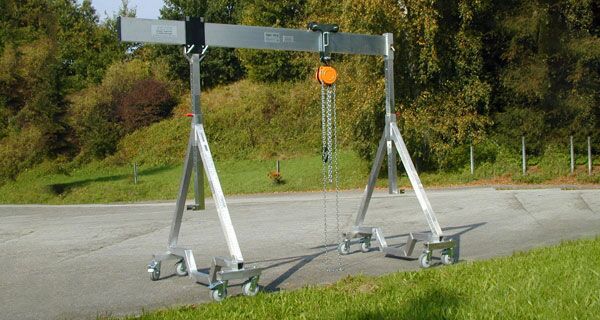
Choosing lifting equipment is not simply about finding something that can handle a heavy load. The right equipment should suit the workspace, support safe handling, be practical for regular use, and provide value over time. A lifting gantry can be a useful option for businesses that need dependable lifting support without installing a permanent overhead structure. However, choosing the right system requires careful consideration of how and where it will be used.
Start With Your Lifting Requirements
Before selecting any lifting equipment, it helps to understand the type of work you need it to perform. Consider the weight and dimensions of the loads, how frequently they need to be moved, and the height required for lifting.
Think about the working environment as well. A system used in a workshop may have different requirements from one used on a construction site, warehouse, maintenance area, or industrial facility. Understanding these practical details early can help narrow down suitable options.
It is also worth considering whether the equipment will be used for one specific task or several applications. Planning for actual working conditions rather than choosing equipment based only on specifications can lead to a more useful and reliable solution.
Quality and Safety Should Come First
Quality matters when equipment is expected to handle substantial loads. The construction, components, rated capacity, and overall design should all be appropriate for the intended application.
Safety is equally important. Lifting equipment needs to be selected and used according to the relevant requirements, with appropriate inspections, maintenance, and operating procedures in place. A well-designed system can provide a more controlled lifting process and help operators work with greater confidence.
When assessing options, businesses should look beyond the initial appearance or price. The quality of materials, engineering, workmanship, and ongoing support can make a significant difference to how equipment performs over the years.
Ease of Use Can Make Everyday Work Better
Equipment can have excellent technical specifications and still be inconvenient if it is difficult to position, operate, or maintain. Ease of use should therefore be part of the decision-making process.
For workplaces where lifting tasks change regularly, practical features such as portability, adjustability, and straightforward operation can be particularly valuable. Workers may need to move equipment between different areas or adapt it to different lifting requirements.
Good usability can also improve the overall customer and employee experience. When equipment fits naturally into existing workflows, there is less disruption and fewer unnecessary complications during routine tasks.
Think About Versatility
One of the useful qualities of a lifting system is its ability to support different applications. Businesses often have changing requirements, particularly in workshops, maintenance environments, manufacturing facilities, and construction settings.
A versatile lifting gantry can provide lifting support across suitable tasks while giving businesses greater flexibility in how they use their available workspace. Depending on the design, it may be possible to adjust or relocate the equipment as operational needs change.
This flexibility can be particularly useful for businesses that do not want to commit to a permanent lifting structure for every area where lifting may occasionally be required.
Consider the Long-Term Value
Initial purchase cost is only one part of the overall investment. Businesses should also consider durability, maintenance requirements, servicing, replacement components, and the expected working life of the equipment.
Choosing a suitable system from the beginning can help avoid the costs associated with equipment that is poorly matched to the application. A solution that remains useful as workloads change may also provide better value over time.
It is worth asking whether the equipment can continue meeting your requirements as your business grows. A thoughtful decision today can reduce the need for unnecessary changes later.
How Customer Expectations Are Changing
Customers increasingly expect more than a product that performs its basic function. They want equipment that is reliable, practical, safe, and supported by knowledgeable professionals.
This has changed the way businesses approach lifting solutions. Rather than simply asking, “What equipment do we need?”, customers are increasingly considering questions such as, “How will this fit into our workflow?” and “What support will we receive after installation?”
Clear advice and application-focused recommendations can make the purchasing process easier. Customers benefit when suppliers take the time to understand their working environment rather than recommending equipment based only on general specifications.
Make a Thoughtful and Sustainable Choice
Sustainability can also form part of a responsible equipment decision. Choosing durable equipment that can remain in service for many years may reduce the need for frequent replacement and help make better use of materials and resources.
It is also sensible to consider equipment that matches the actual application. Selecting a system with appropriate capacity and features, rather than unnecessarily oversized equipment, can support more efficient purchasing and use.
Thoughtful planning does not mean choosing the cheapest option. It means considering quality, performance, safety, maintenance, longevity, and the practical needs of the workplace together.
Why the Right Choice Matters
The right lifting equipment should make work more manageable without creating unnecessary complexity. When businesses understand their lifting requirements, assess quality, consider usability, and think about future needs, they are better positioned to choose a solution that supports everyday operations.
We understand that every workplace has different lifting requirements. We work with customers to help identify practical crane and lifting solutions suited to their applications, with a focus on reliability, safety, service, and long-term value.
Conclusion
Choosing a lifting gantry is about more than load capacity or upfront cost. The right choice should consider safety, quality, ease of use, versatility, workplace requirements, maintenance, and future needs. Taking the time to assess these factors can help businesses make a confident and practical investment. At HES Cranes, we aim to provide knowledgeable guidance and dependable lifting solutions that support customers well beyond the initial purchase.