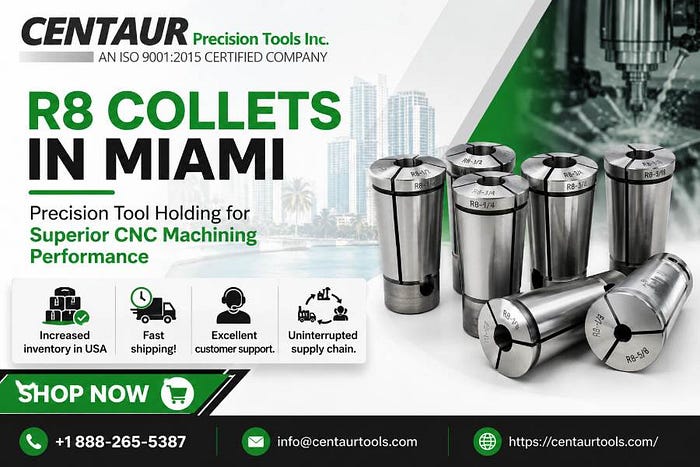
Precision machining depends on the ability of a machine and its tooling system to hold cutting tools securely and accurately. Among the various workholding and toolholding options available, R8 collets are widely used for milling applications where reliable tool retention and concentricity are important. For manufacturers, machinists, and workshops looking for R8 Collets in Miami, understanding what makes a quality collet can help ensure better machining performance and consistent results.
What Are R8 Collets?
R8 collets are precision tool-holding components commonly used with milling machines and compatible spindles. They are designed to grip cutting tools or workpieces securely while maintaining alignment with the machine spindle.
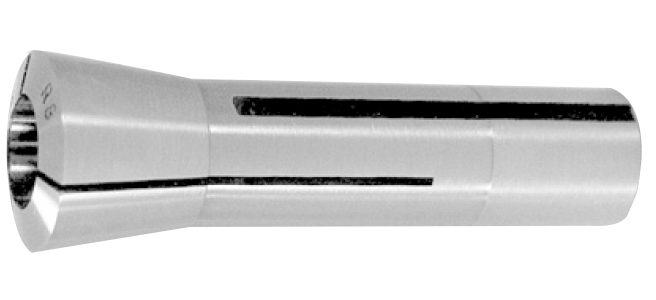
An R8 collet typically has a tapered exterior that fits into an R8 spindle and a split design that allows it to contract around the tool when tightened. This design provides a practical balance of tool retention, accessibility, and precision for many milling operations.
Because the collet forms the connection between the spindle and cutting tool, its quality can have a direct effect on machining accuracy.
Why Collet Quality Matters
Not all collets deliver the same level of performance. Manufacturing accuracy, material quality, surface finish, and inspection standards can influence how consistently a collet holds a tool.
When selecting R8 Collets in Miami, several factors deserve attention:
- Concentricity: Accurate concentricity helps minimize tool runout.
- Material quality: Durable materials can withstand repeated clamping and machining conditions.
- Precision manufacturing: Consistent dimensions help ensure proper spindle and tool fit.
- Surface finish: Smooth contact surfaces can support reliable seating and clamping.
- Tool compatibility: The collet should match the intended tool diameter and spindle configuration.
- Inspection: Quality-control processes can help identify dimensional or functional issues before products reach the user.
These characteristics become particularly important during precision milling, where even small variations can influence surface finish, dimensional accuracy, and tool life.
Choosing the Right R8 Collet Size
R8 collets are available in different bore sizes to accommodate various cutting tool diameters. Selecting the correct size is essential for achieving a secure grip.
A collet should be selected according to the manufacturer’s specifications and the actual tool diameter. Using an incorrectly sized collet may result in poor clamping, increased runout, or unnecessary wear.
It is also important to avoid relying on excessive tightening to compensate for an improper fit. The correct collet and tool combination should provide appropriate gripping force without placing unnecessary stress on the components.
Consider Concentricity and Runout
Runout is an important consideration for precision machining. It refers to the amount by which a rotating tool deviates from its intended axis.
Excessive runout can contribute to uneven cutting, inconsistent surface finishes, increased tool wear, and dimensional variations. A properly manufactured R8 collet with accurate internal and external surfaces can help reduce these problems when used correctly.
When comparing R8 Collets in Miami, ask about applicable accuracy specifications and inspection procedures. A supplier that provides clear technical information makes it easier to select tooling suited to your machining requirements.
Material and Manufacturing Quality
The manufacturing process plays an important role in collet performance. Precision grinding, heat treatment, and controlled manufacturing processes can contribute to dimensional consistency and durability.
A quality R8 collet should be manufactured to appropriate specifications and checked for critical characteristics. Consistency across a complete set is also valuable because machinists often use multiple collets for different tool sizes.
For industrial environments, choosing consistently manufactured components can simplify tool setup and help maintain repeatable machining results.
Match the Collet to the Application
The best R8 collet depends on the machining task. Consider factors such as:
- Cutting tool diameter
- Milling machine and spindle specifications
- Required machining accuracy
- Cutting speeds and feeds
- Type of material being machined
- Frequency of tool changes
- Production volume
For general milling work, standard R8 collets may provide a suitable solution. More demanding precision applications may require closer attention to runout, balance, dimensional tolerances, and inspection standards.
Proper Use and Maintenance
Even a high-quality collet can perform poorly if it is incorrectly installed or maintained. Before use, inspect the collet and spindle for chips, dirt, or damage. Clean contact surfaces carefully and make sure the tool is seated correctly.
Avoid over-tightening the collet, as excessive force can damage components or affect their performance. Collets should also be inspected periodically for signs of wear, corrosion, deformation, or damage.
Proper storage is equally important. Keeping collets clean and protected from contamination can help preserve their condition between machining operations.
Finding R8 Collets in Miami
When sourcing R8 Collets in Miami, buyers should look beyond price alone. Product specifications, manufacturing standards, dimensional accuracy, availability, and technical support are all useful factors to consider.
A supplier with experience in precision tooling can also help users identify suitable collet sizes and configurations for specific milling requirements. Clear product information makes it easier to compare options and avoid compatibility issues.
Final Considerations
Selecting quality R8 collets is an important part of establishing a dependable milling setup. Accurate dimensions, good concentricity, suitable materials, proper fit, and consistent manufacturing can all contribute to reliable toolholding and precision machining.
For businesses and machining professionals evaluating R8 Collets in Miami, taking the time to review specifications and application requirements can lead to better tooling decisions and more consistent results.