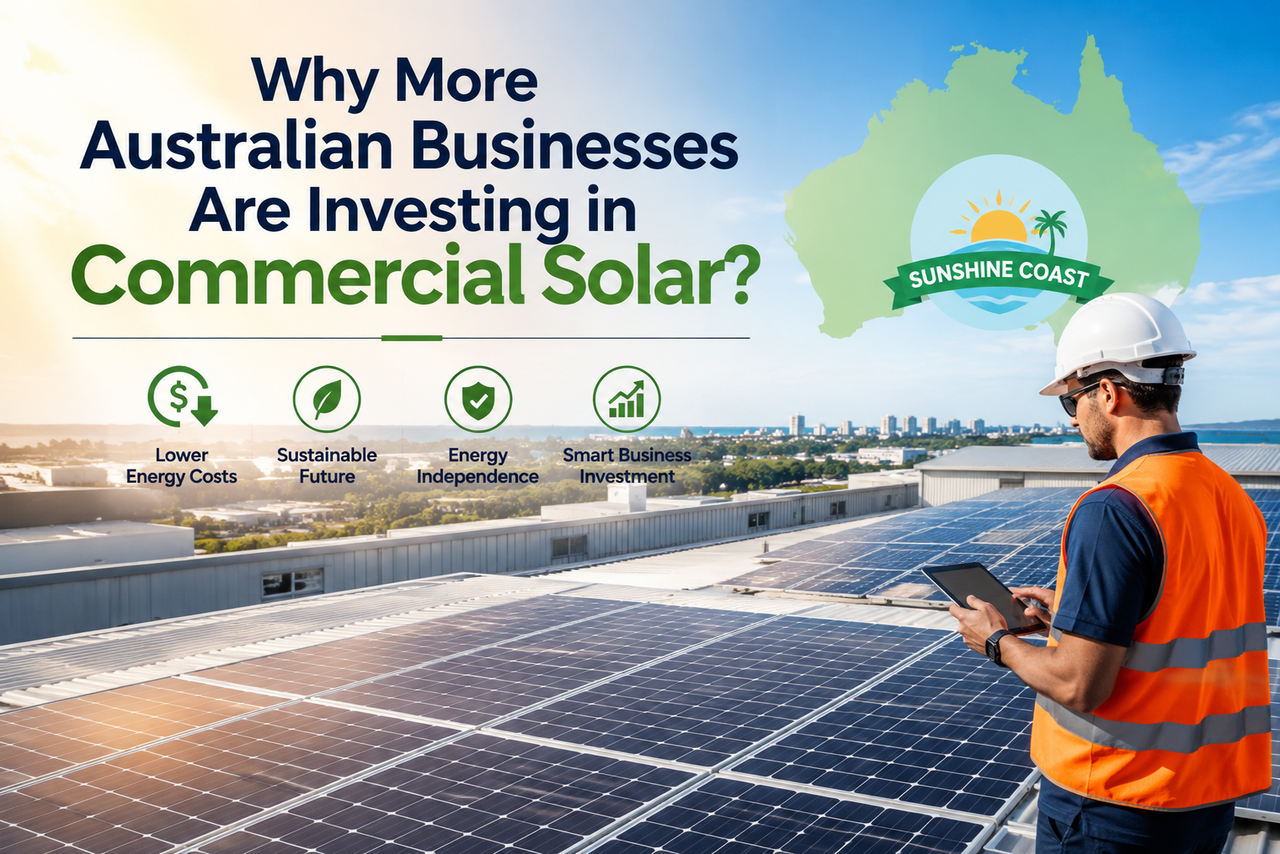
Have you noticed more solar panels popping up on warehouse rooftops and office buildings across Australia? Are you wondering whether your business is missing out on something big? What if you could slash your electricity bills while doing your bit for the environment?
The truth is, Australian businesses are embracing commercial solar at an unprecedented rate. From small cafés in Melbourne to sprawling distribution centres in Perth, companies of all sizes are making the switch. And it’s not just about being green – though that’s certainly a bonus. The combination of soaring energy costs, attractive government incentives, and increasingly affordable solar technology has created a perfect storm for commercial solar adoption.
What Is Commercial Solar and How Does It Work?
Understanding Commercial Solar Panel Systems
Commercial solar systems are essentially larger versions of the residential panels you might have at home. However, they’re specifically designed to meet the higher energy demands of businesses. These systems typically range from 10kW to 100kW or more, depending on your premises and energy needs.
The setup usually includes solar panels mounted on your roof, an inverter that converts the energy, and monitoring equipment. Some businesses also add battery storage to save excess energy for later use.
How Do Solar Panels Generate Power for Businesses?
Solar panels contain photovoltaic cells that convert sunlight into direct current (DC) electricity. The inverter then transforms this into alternating current (AC), which powers your lights, computers, machinery, and everything else in your business.
During sunny days, your system generates electricity in real-time. Any excess power can either flow back into the grid (often earning you credits) or charge batteries for evening use. It’s beautifully simple once you understand the basics.
Why Are Australian Businesses Switching to Solar Energy?
Rising Electricity Costs Across Australia
Let’s be honest – electricity prices in Australia have been eye-watering lately. Over the past decade, commercial electricity rates have climbed steadily, squeezing profit margins for businesses everywhere. For many companies, energy is now one of the top three operational expenses.
Solar offers a way out of this cycle. Once installed, your panels generate free electricity from sunlight. You’re essentially locking in a portion of your energy costs for the next 25 years or more.
Government Incentives and Rebates Driving Adoption
The Australian government has created several attractive incentives to encourage solar adoption. Small-scale Technology Certificates (STCs) can significantly reduce your upfront costs, sometimes by thousands of dollars. Various state governments also offer additional rebates and grants.
These incentives won’t last forever, which is why many businesses are acting now. The financial support makes the initial investment much more manageable.
Corporate Sustainability Goals and Consumer Expectations
Today’s customers care about sustainability. They’re actively choosing businesses that demonstrate environmental responsibility. Installing solar panels sends a clear message about your company’s values.
Plus, many corporations now have formal sustainability targets. Solar helps tick those boxes while delivering genuine environmental benefits – it’s a win-win situation.
How Much Can a Business Save with Commercial Solar?
Calculating Your Potential Energy Savings
Your savings depend on several factors: your current electricity usage, the size of your solar system, and your location’s sunlight hours. Most Australian businesses can expect to offset between 30% and 70% of their electricity bills with an appropriately sized system.
Understanding Return on Investment (ROI) for Solar
Commercial solar typically delivers excellent ROI compared to other business investments. Where else can you find returns of 15% to 25% annually? Traditional investments rarely offer such consistent, predictable returns.
The key is matching your system size to your actual energy consumption. An experienced installer can analyse your bills and recommend the optimal configuration.
Is Commercial Solar Worth It for Small Businesses?
Solar Solutions for Different Business Sizes
You don’t need a massive warehouse to benefit from solar. Systems are scalable, meaning even a small retail shop with limited roof space can install panels. The key is finding the right solution for your specific circumstances.
Smaller systems of 10-30kW work brilliantly for cafés, offices, and small retail outlets. Larger operations might need 50kW, 100kW, or even bigger installations.
Financing Options: Leasing vs Purchasing Outright
Can’t afford to buy outright? No problem. Many businesses lease their solar systems or use power purchase agreements (PPAs). These arrangements let you start saving immediately without significant upfront costs.
Purchasing outright delivers the highest long-term returns, but leasing makes solar accessible to businesses with limited capital. Both options can work depending on your financial situation.
What Are the Benefits of Commercial Solar Panels?
Reduced Operational Costs
Lower electricity bills mean more money for wages, inventory, marketing, or whatever your business needs. Solar transforms a variable expense into a predictable, minimal cost.
Energy Independence and Price Stability
Solar protects you from future electricity price rises. While grid prices continue climbing, your solar-generated power remains free. This stability makes financial planning much easier.
Enhanced Brand Reputation and Customer Trust
Customers notice when businesses invest in sustainability. Solar panels are a visible commitment to environmental responsibility that can strengthen customer loyalty and attract new clientele.
Low Maintenance and Long Lifespan
Modern solar panels require minimal maintenance – occasional cleaning and annual inspections are typically sufficient. Quality systems last 25-30 years, delivering decades of reliable service.
.jpg)
How Long Does It Take for Commercial Solar to Pay for Itself?
Typical Payback Periods in Australia
Most Australian commercial solar systems pay for themselves within 3 to 5 years. After that, you’re essentially generating free electricity for another two decades or more.
Factors That Influence Payback Timeframes
Your payback period depends on installation costs, available incentives, your electricity rates, and how much solar energy you actually use during daylight hours. Businesses operating primarily during the day typically see faster paybacks.
Choosing the Right Commercial Solar Installer
What to Look for in a Solar Provider?
Look for Clean Energy Council accreditation, solid warranties, and genuine local experience. Check online reviews and ask for references from similar businesses.
Questions to Ask Before Signing a Contract
Ask about warranty terms, expected system output, and ongoing maintenance support. A reputable installer will happily answer all your questions without pressure.
Common Concerns About Commercial Solar
Upfront Costs and Budget Worries
While solar requires investment, financing options make it accessible. When you factor in incentives and ongoing savings, the numbers usually stack up nicely.
Roof Suitability and Installation Logistics
Most commercial roofs are suitable for solar. Even if yours needs some modification, experienced installers can usually find workable solutions.
Conclusion: Is Now the Right Time to Invest in Commercial Solar?
Looking at the evidence, it’s clear why so many Australian businesses are making the switch to commercial solar. The combination of significant cost savings, generous government incentives, and genuine environmental benefits creates a compelling case that’s hard to ignore.
The financial argument is particularly strong right now. With electricity prices showing no signs of decreasing and government incentives potentially being wound back in future years, the current conditions are genuinely favourable. Waiting could mean paying more for installation while continuing to fork out for expensive grid electricity.