 Before selling a diamond ring, inheriting a family heirloom, or purchasing a stone from a private seller, one question matters above all others: Is the diamond real?
From cubic zirconia and moissanite to synthetic lab-grown diamonds, today’s alternatives can closely resemble natural diamonds at first glance. It’s only through closer inspection of the finer details that a rare and valuable gem worth hundreds or even thousands of dollars can be distinguished from a merely shiny stone
Knowing how to identify an authentic diamond can save you from costly mistakes.
While no at-home test can guarantee authenticity with complete certainty, several practical screening methods can help you determine whether a diamond deserves a closer look from a professional. Whether you’re hoping to sell a piece of jewelry or avoid getting scammed when buying one, here’s how to tell if a diamond is real.
1. Start with the Documentation
The easiest way to verify a diamond is through its paperwork. Reputable diamonds are often accompanied by grading reports from recognized gemological laboratories such as the Gemological Institute of America (GIA) or the International Gemological Institute (IGI).
These reports provide details about the stone’s cut, color, clarity, carat weight, and identifying characteristics. If the diamond has a laser inscription on its girdle, the report number can often be matched directly to the stone.
Documentation is especially important for rare and high-value stones, including Argyle Pink Diamonds. Because the Argyle mine in Western Australia ceased operations in 2020, genuine Argyle Pink Diamonds have become increasingly scarce and valuable. Authentic stones typically come with detailed provenance and certification.
2. Examine the Diamond’s Sparkle

Many people assume that a brighter sparkle means a better diamond, but real diamonds reflect light differently from imitations.
A natural diamond produces a combination of white light (brilliance) and colored flashes (fire). Cubic zirconia often displays excessive rainbow colors, while glass tends to look dull or overly transparent.
Hold the stone under a light source and observe how it reflects light. A real diamond’s sparkle appears balanced and crisp rather than overly colorful or glassy.
3. Try the Fog Test
One of the simplest at-home tests involves your breath.
Hold the stone close to your mouth and breathe on it as if fogging a mirror. Because diamonds conduct heat extremely efficiently, the fog should disappear almost immediately.
If the stone remains cloudy for several seconds, it may be an imitation. However, this test is not foolproof, as some diamond simulants can produce similar results.
4. Check the Setting and Mounting
The way a stone is set can provide clues about its authenticity.
Genuine diamonds are often mounted in high-quality metals such as platinum, white gold, yellow gold, or sterling silver. Check for metal hallmarks inside the ring band or jewelry setting.
While a real diamond can technically be placed in an inexpensive setting, valuable stones are usually paired with precious metals. A large “diamond” mounted in a cheap alloy should raise questions.
5. Use a Magnifying Glass or Jeweler’s Loupe
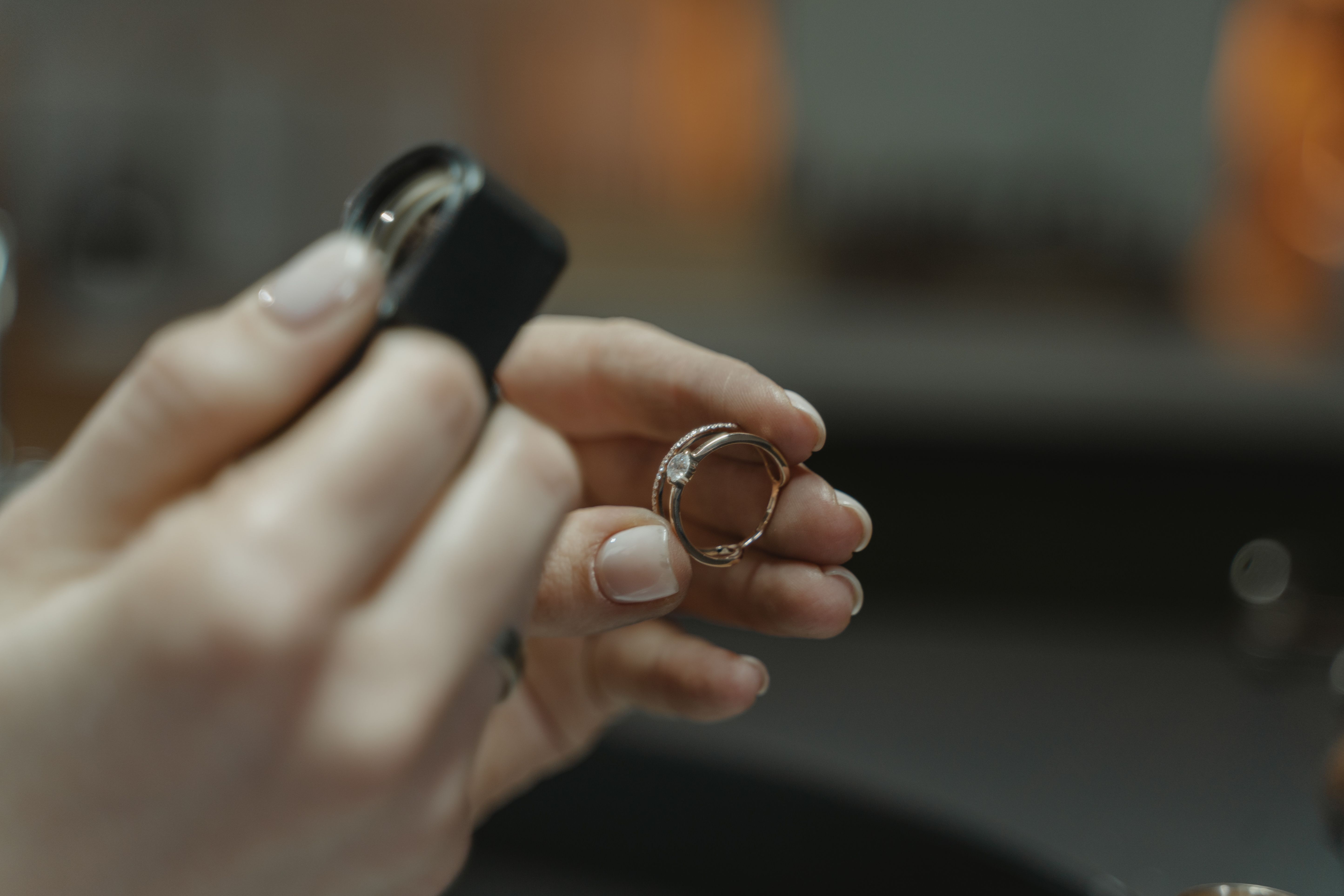
Natural diamonds typically contain tiny internal imperfections known as inclusions. These microscopic features are created during the diamond’s formation deep within the earth.
Using a 10x jeweler’s loupe, look for small inclusions, feathering, or irregular growth patterns. Perfect clarity can sometimes indicate a synthetic stone or diamond simulant, although exceptionally high-quality natural diamonds do exist.
Also examine the edges of the stone. Real diamonds usually have very sharp facet junctions, while softer materials may show rounded or worn edges.
6. Perform the Water Test
If the diamond is loose and not mounted in jewelry, a simple water test can provide additional clues.
Fill a glass with water and gently drop the stone into it. Because diamonds are dense, they generally sink quickly to the bottom.
Many fake stones will also sink, so this test should only be used as a preliminary screening method rather than definitive proof.
7. Read Through the Stone
A real diamond’s faceting bends light in a way that makes it difficult to see clearly through the stone.
Place a loose diamond flat side down on a newspaper or printed page. If you can easily read the text through the stone, it may not be a genuine diamond.
This test works best with round brilliant-cut diamonds and may be less reliable for other cuts.
8. Consider a Diamond Tester

Electronic diamond testers measure thermal or electrical conductivity and can provide a more reliable assessment than most home methods.
These devices are widely available and can quickly distinguish many common simulants from genuine diamonds. However, some testers cannot differentiate between natural diamonds and lab-grown diamonds, and certain moissanite stones may require more advanced equipment.
For anyone regularly buying or selling jewelry, a quality diamond tester can be a worthwhile investment.
9. Know the Limitations of Home Testing
While these methods can help identify obvious fakes, they are not substitutes for professional evaluation. Advances in gemstone technology have made some synthetic diamonds and simulants extremely convincing.
A stone that passes multiple home tests may still require expert examination to confirm its origin and value.
This is particularly true for rare diamonds, colored diamonds, antique jewelry, and investment-grade stones. Specialized laboratory equipment can detect treatments, identify lab-grown diamonds, and verify provenance.
When to Consult an Expert

If you’re preparing to sell a diamond, obtain an appraisal, or make a significant purchase, professional verification is the safest option.
Certified gemologists use microscopes, spectroscopy, conductivity testing, and advanced imaging tools to determine authenticity and assess market value accurately.
An expert evaluation not only confirms whether a diamond is real but also provides important information about quality, rarity, and resale potential.
Protect Your Investment with Professional Verification
Determining whether a diamond is real often starts with simple observation and basic at-home tests. But when significant money is involved, whether you’re selling an inherited ring, ending a chapter with an engagement ring, or purchasing a rare stone such as an Argyle Pink Diamond, professional authentication remains the most reliable way to protect your investment. A small appraisal fee today can prevent a costly mistake tomorrow.
Author Bio: Carmina Natividad is a resident writer for Musson, a prestigious Australian fine jewellery house celebrated for its exquisite handcrafted creations and rare gemstones, including the world-renowned Argyle pink diamonds. She enjoys sharing practical insights on everything from wedding and styling tips to rare gems and jewellery trends.