Rei Kawakubo is one of the most influential and unconventional figures in modern fashion. As the founder and creative force behind Comme des Garcons she transformed the way designers, critics, and consumers think about clothing. Her work challenges traditional definitions of beauty, elegance, femininity, and even what fashion itself should represent. Rather than following trends, Kawakubo has built a creative world where experimentation, contradiction, and individuality are at the center.
The Early Vision of Rei Kawakubo
Rei Kawakubo was born in Tokyo in 1942 and studied art and literature before entering the fashion industry. Her educational background helped shape her unconventional approach to design. Instead of beginning with traditional fashion training, she developed an interest in visual expression, culture, and creative concepts.
In 1969, Kawakubo established Comme des Garçons. From the beginning, the label was different from conventional fashion houses. She was interested in creating clothing that expressed ideas rather than simply producing garments designed to flatter the body.
The name Comme des Garçons, French for “like boys,” suggested an attitude of independence and resistance to traditional expectations. Kawakubo’s early work particularly questioned established ideas about women’s clothing and femininity.
Breaking Traditional Fashion Rules
Kawakubo’s creative philosophy is based heavily on questioning. She has repeatedly challenged assumptions about what clothing should look like, how it should fit, and what makes something beautiful.
Traditional fashion often emphasizes symmetry, proportion, polish, and recognizable silhouettes. Kawakubo frequently does the opposite. Her collections can include oversized shapes, irregular construction, unexpected volumes, unfinished details, and unusual combinations of materials.
Her designs are not always immediately easy to understand. That is part of their purpose. Instead of giving audiences familiar fashion, Kawakubo encourages them to reconsider their expectations.
This philosophy made Comme des Garçons one of the most important avant-garde fashion labels in the world.
The Paris Breakthrough
Comme des Garçons gained major international attention when it presented its collection in Paris in 1981. The show introduced Kawakubo’s distinctive aesthetic to a global fashion audience.
The collection challenged the polished and traditionally feminine appearance associated with mainstream fashion. Dark colors, loose forms, distressed surfaces, and unconventional shapes created a dramatic alternative to established European fashion.
The response was divided. Some critics found the designs difficult or unattractive, while others recognized them as revolutionary. Regardless of the reaction, Kawakubo had succeeded in making people discuss fashion differently.
Her Paris debut also contributed to the growing international recognition of Japanese designers. Alongside other important Japanese creative figures, Kawakubo demonstrated that Tokyo could be a major source of innovative fashion ideas.
The Concept of Imperfection
One of the defining characteristics of Kawakubo’s work is her relationship with imperfection. She has challenged the idea that clothing must be perfectly finished or traditionally attractive.
Asymmetry, exposed seams, uneven proportions, holes, layering, and distorted forms can become intentional design features. What might appear to be a mistake in conventional clothing can become the central creative idea in a Comme des Garçons garment.
This philosophy has had a lasting influence on contemporary fashion. Many designers have adopted approaches involving raw edges, reconstructed clothing, exaggerated proportions, and unconventional tailoring.
Kawakubo demonstrated that imperfection can create beauty and that clothing can become more interesting when it refuses to behave exactly as expected.
Redefining the Human Silhouette
Kawakubo’s approach to the human body is particularly distinctive. Instead of simply designing garments to emphasize the natural shape of the wearer, she often changes or obscures that shape.
Oversized forms, unusual padding, exaggerated volumes, and sculptural construction can create entirely new silhouettes. Her designs can make the body appear larger, smaller, wider, or more abstract.
The result is a different understanding of fashion. Clothing becomes something that interacts with the body rather than simply following it.
This idea has influenced modern designers who experiment with proportion and volume. Oversized jackets, wide trousers, sculptural dresses, and exaggerated outerwear are now common elements of contemporary fashion, but Kawakubo was among the designers who pushed these concepts to an extreme.
Fashion as Art and Ideas
For Kawakubo, fashion can function as a form of artistic expression. Her runway presentations often communicate concepts rather than simply showcasing commercially wearable clothing.
Some collections have explored themes such as absence, destruction, repetition, transformation, and the relationship between clothing and the body. The garments become part of a larger visual and intellectual experience.
This approach helped expand the role of fashion shows. A runway presentation could become closer to an art installation or performance than a traditional product presentation.
Kawakubo’s work demonstrates that fashion can ask questions. It can provoke emotions, create uncertainty, and encourage audiences to look at familiar objects in unfamiliar ways.
The Relationship Between Fashion and Commerce
Although Comme des Garçons is strongly associated with experimental design, Kawakubo has also developed commercially successful products. This balance is one of the most impressive aspects of her career.
The brand includes highly conceptual runway collections as well as accessible clothing, fragrances, accessories, and collaborations. This allows the creative philosophy to reach different audiences.
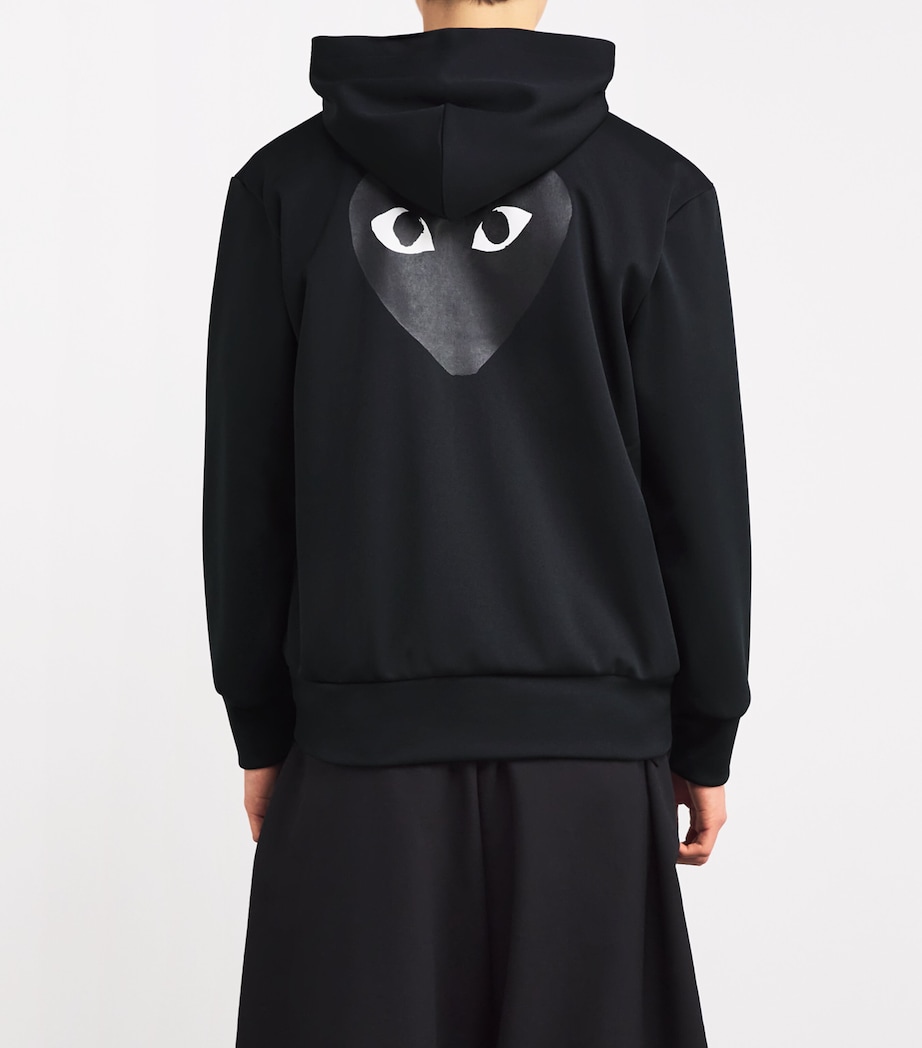
Comme des Garçons PLAY is a particularly recognizable example. Its casual T-shirts, hoodies, sweaters, and other everyday garments feature a distinctive heart-with-eyes graphic. Compared with Kawakubo’s experimental runway designs, PLAY offers a simpler entry point into the world of Comme des Garçons.
The success of these products shows that creativity and commercial appeal do not necessarily have to be opposites.
Comme des Garçons and Collaboration
Collaboration has become another important part of Kawakubo’s creative world. Comme des Garçons has worked with brands, artists, designers, and cultural organizations across different industries.
These collaborations often combine Comme des Garçons’ experimental identity with another company’s established product or visual language. Sneakers, fragrances, accessories, furniture, and other products have become opportunities for creative experimentation.
Collaborations have also helped connect Comme des Garçons with younger consumers and streetwear communities. The brand demonstrated that high fashion could interact with popular culture without losing its distinctive character.
Dover Street Market and Creative Community
Kawakubo’s influence extends beyond clothing through Dover Street Market, a retail concept created with Adrian Joffe.
Dover Street Market was designed as more than a conventional store. It brings together fashion, art, design, architecture, and emerging creative talent. Its constantly changing environment reflects Kawakubo’s interest in experimentation.
The concept has influenced the way contemporary fashion stores operate. Retail spaces can now function as cultural destinations, exhibition spaces, and creative communities rather than simply locations for selling products.
Influence on Modern Fashion
Rei Kawakubo’s influence can be seen throughout contemporary fashion. Designers have adopted ideas associated with her work, including deconstruction, oversized silhouettes, gender-neutral dressing, unconventional materials, asymmetry, and conceptual presentations.
Her influence also extends to streetwear. The modern relationship between luxury fashion and casual clothing owes something to Comme des Garçons’ willingness to move between different cultural spaces.
Kawakubo has also inspired designers to think independently. Rather than asking what consumers already want, her work encourages designers to ask what fashion could become.
The Continuing Creative World of Comme des Garçons
The creative world of Comme des Garçons remains distinctive because it does not depend on a single recognizable formula. Kawakubo continually experiments with new shapes, ideas, materials, and presentations.
Her career demonstrates that innovation requires the courage to challenge expectations. Some designs may be immediately popular, while others may require time and reflection. What remains consistent is the commitment to creative freedom.
Conclusion
Rei Kawakubo has changed fashion by proving that clothing can be more than decoration. Through Comme des Garçons, she created a creative language built around experimentation, individuality, imperfection, and intellectual curiosity.
Her influence can be found in avant-garde fashion, contemporary streetwear, gender-fluid clothing, deconstruction, luxury collaborations, and modern retail. Most importantly, Kawakubo encouraged fashion to question itself.