
When homeowners see a heavily stained or moss-covered roof, pressure washing may seem like the quickest solution. However, powerful water pressure is not necessarily the safest approach for every roof.
Roof softwashing takes a different approach, using lower water pressure alongside suitable cleaning treatments to deal with organic growth. But is it actually safer than pressure washing?
The answer depends on the roof material, its age, condition and the cleaning method being used.
Roof Softwashing vs Pressure Washing: The Key Differences
| Factor | Roof Softwashing | Pressure Washing |
| Water pressure | Low pressure | High pressure |
| Main cleaning approach | Cleaning treatment + controlled rinsing | Water pressure physically removes contamination |
| Moss removal | Treatment can help break down organic growth | Physically blasts moss away |
| Risk to older tiles | Generally lower when correctly performed | Potentially higher |
| Risk of dislodging tiles | Lower with appropriate technique | Higher if excessive pressure is used |
| Effect on pointing/seals | Generally less aggressive | Can affect vulnerable areas |
| Suitable for fragile surfaces | Often more appropriate | May be unsuitable |
| Speed of visible cleaning | Can require treatment time | Often produces immediate visible results |
| Long-term organic growth control | Treatment can address remaining growth | Mainly removes surface growth |
| Best suited to | Roofs requiring gentler cleaning | Durable surfaces where pressure is appropriate |
Neither method should automatically be considered suitable for every roof. A proper assessment should come before cleaning.
Why UK Roofs Are Prone to Moss and Algae
The UK’s climate creates challenging conditions for roof maintenance.
Frequent rainfall keeps roof surfaces damp, while shaded areas may remain wet for long periods. During autumn, leaves and organic debris can accumulate on tiles. Winter brings colder temperatures, shorter daylight hours and repeated wetting and drying.
Moss and algae are particularly likely to develop where:
- The roof receives little direct sunlight
- Trees overhang the property
- Gutters are blocked
- Moisture remains on the roof
- Organic debris accumulates
- The roof has a textured or weathered surface
Regular maintenance can help prevent organic growth from becoming excessive.
How Does Pressure Washing Affect Roof Tiles?
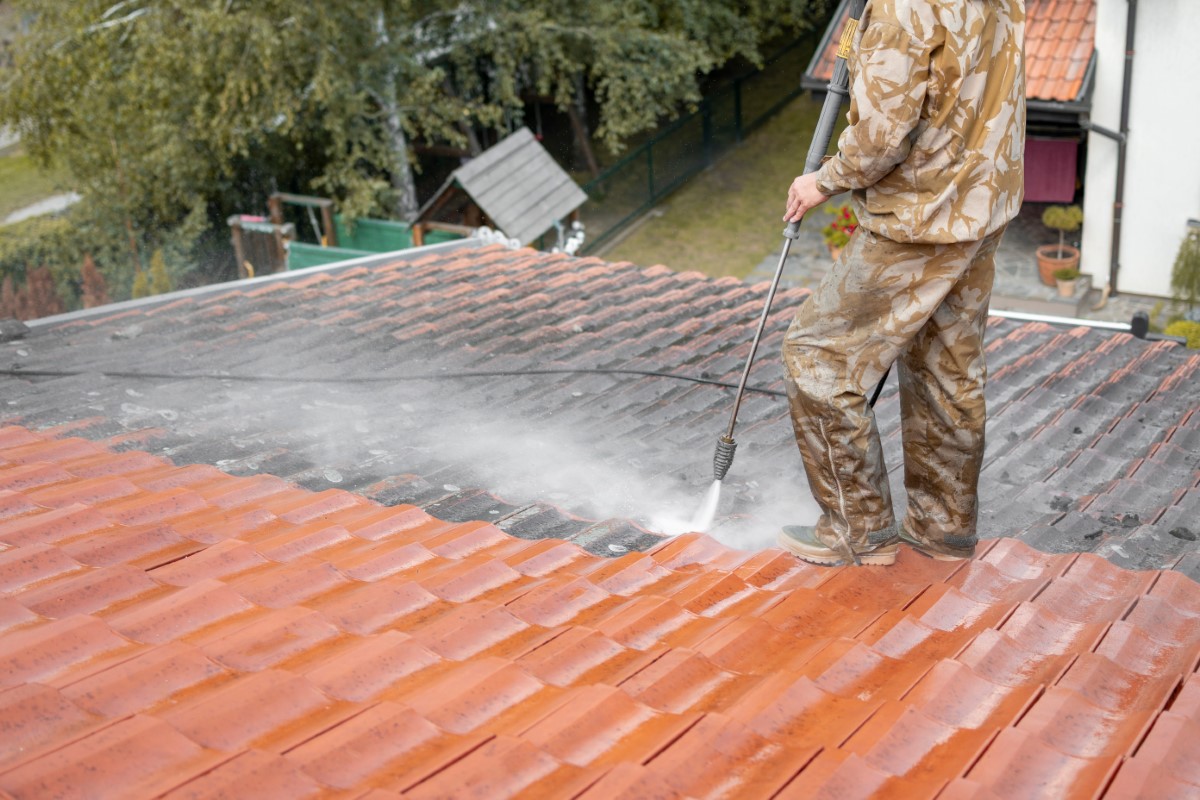
Pressure washing removes dirt and moss through physical force. On a suitable, robust surface, this can be effective.
The problem is that roofs are not all the same.
Excessive pressure can potentially:
- Damage weathered tiles
- Dislodge loose tiles
- Remove surface material
- Disturb pointing or seals
- Force water into vulnerable areas
- Create uneven cleaning marks
Older UK roofs may be particularly vulnerable if tiles have already become brittle or damaged.
This does not mean pressure washing is always harmful. It means the pressure, nozzle, distance and technique need to be appropriate for the particular roof.
Why Softwashing Uses a Different Approach
Softwashing aims to reduce reliance on physical force.
A suitable cleaning treatment is applied to the affected areas, allowing it to work on moss, algae and other organic contamination. The surface can then be rinsed using controlled, lower-pressure water.
This can be useful when the objective is to clean the roof without aggressively blasting the surface.
However, the cleaning solution still needs to be appropriate for the roof material and surrounding environment. Incorrect chemicals or poor application can create their own problems.
Which Method Is Safer for Older Roofs?
For an older or weathered roof, avoiding unnecessary physical stress can be particularly important.
This is one reason homeowners may consider roof softwashing services when dealing with established moss or algae.
A professional should first inspect the roof for:
- Cracked tiles
- Loose tiles
- Missing sections
- Damaged flashing
- Deteriorated pointing
- Existing leaks
- Fragile or heavily weathered surfaces
Cleaning should not be used to hide structural defects. If the roof requires repair, those problems should be addressed separately.
What About Roofs With Heavy Moss?
Heavy moss can make a roof look significantly older and more neglected than it really is.
Pressure washing can remove visible moss quickly, but it may not be the best choice simply because it produces an immediate result.
Softwashing can combine physical removal where appropriate with a treatment designed to address organic growth. This may provide a more controlled approach, particularly where aggressive pressure could damage the roof.
The correct method should still be determined by the roof’s condition rather than by the name of the cleaning technique.
Softwashing During Different UK Seasons
Spring
Spring can be a useful time to assess the roof after the wetter winter months. Moss and algae may become particularly visible as temperatures rise.
Summer
Drier weather can make cleaning and drying easier, although suitable weather conditions should still be checked before treatment.
Autumn
Falling leaves can increase organic debris on roofs and in gutters. Clearing gutters and keeping roof drainage functioning properly can help reduce moisture-related problems.
Winter
Winter is generally less suitable for roof cleaning when conditions are persistently wet, icy or unsafe. Slippery surfaces also increase the risks associated with working at height.
Is Softwashing Completely Risk-Free?
No cleaning method is completely risk-free.
Softwashing can reduce the need for high-pressure water, but the process still involves working at height and using cleaning treatments.
A professional service should consider:
- Roof material
- Existing damage
- Appropriate treatment
- Water pressure
- Surrounding plants
- Windows and exterior surfaces
- Drainage
- Weather conditions
- Safe access
The chemicals used should be handled responsibly and according to their intended application.
What About “Soft Wash Roof Cleaning Near Me”?
If you search online for Soft Wash Roof Cleaning Near Me, don’t choose a company solely because it offers the lowest price.
Before booking, ask:
- Will the roof be inspected first?
- What cleaning method will be used?
- What treatment is being applied?
- Is the method suitable for my roof material?
- How will plants and surrounding surfaces be protected?
- Is the company insured?
- Will damaged tiles be identified before cleaning?
- What happens if weather conditions are unsuitable?
A professional should be able to explain the proposed process rather than simply promising that the roof will look “like new”.
Are Soft Washing Services Worth Considering?
For homeowners concerned about protecting roof tiles, Soft Washing Services can be worth considering where moss, algae and lichen are the main problems and aggressive pressure is unnecessary.
The biggest advantage is not simply that softwashing uses less pressure. It is that the cleaning process can be designed around the roof rather than relying primarily on physical force.
However, the quality of the contractor matters. Poor chemical selection, excessive application or inadequate preparation can still cause problems.
Final Verdict: Which Is Safer?
For many UK roofs, particularly older, weathered or delicate surfaces, a properly carried-out softwashing approach can be gentler than aggressive pressure washing.
Pressure washing may still have appropriate applications, but it should not be used simply because it is faster.
The safest choice depends on the roof material, condition, level of organic growth and the competence of the person carrying out the work.
If your roof has developed moss or algae after several wet UK seasons, consider getting an assessment before choosing a cleaning method. Reputable roof softwashing services should be able to explain why a particular approach is suitable for your roof and what precautions will be taken.
Ultimately, good roof cleaning is not about using the most powerful equipment. It is about removing contamination effectively while protecting the roof underneath.